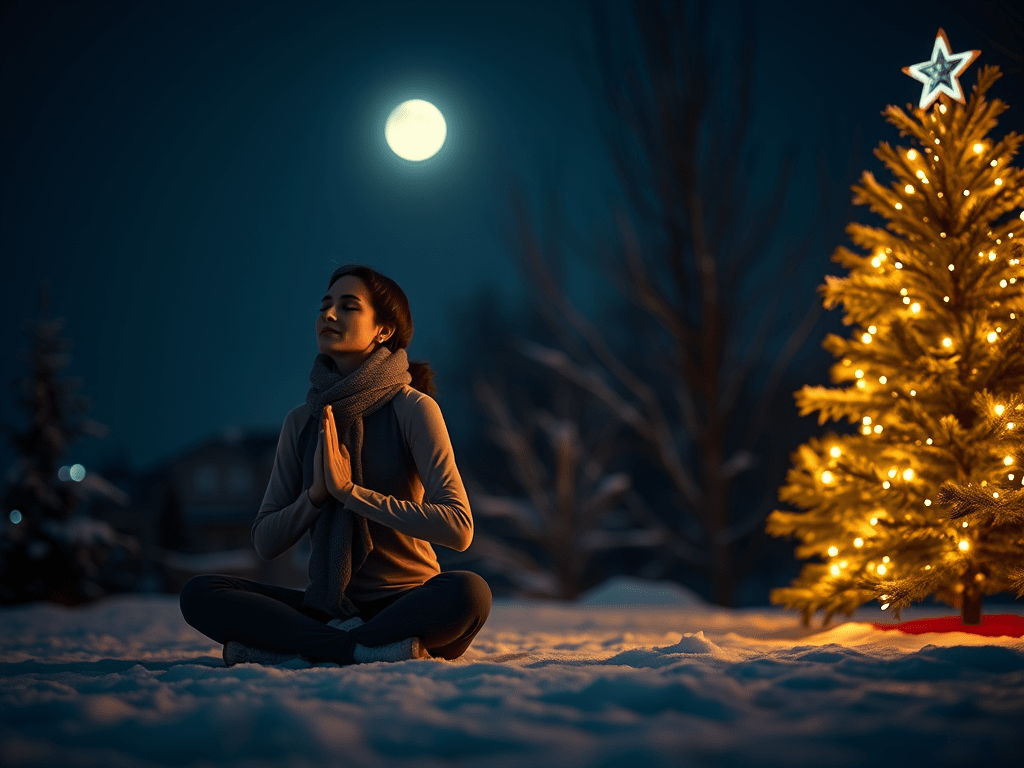
Honoring the dark, nourishing the nervous system, and planting seeds for renewal.
Denver Clark, C-IAYT, ERYT-500
The Winter Solstice on December 21st marks the longest night of the year—a sacred pause in the natural world where darkness peaks and the slow return of light begins. In many traditions, this is not a time for pushing forward or setting aggressive intentions, but for resting deeply, conserving energy, and listening inward.
In yoga and Ayurveda, the solstice invites us to embody stillness, warmth, receptivity, and reflection. Rather than resisting the season’s call to slow down, we are encouraged to meet it consciously—through the way we move, breathe, eat, and rest.
The Energy of Winter
In Ayurveda, winter is governed primarily by Vata dosha (cold, dry, mobile) with an undercurrent of Kapha (heavy, slow, grounding), depending on climate and constitution. Even in warmer regions like Florida, the energetic qualities of winter are still felt in the nervous system: less daylight, quieter social rhythms, and a natural inward turn.
From a yogic lens, winter aligns with:
- Yin energy: depth, stillness, restoration
- Apana vayu: grounding, downward-moving energy
- Svadhyaya (self-study): reflection, insight, and integration
This is a season to restore before we expand.
Embodying the Solstice in Your Yoga Practice
Winter yoga is not about heat-building or peak poses—it’s about regulation, support, and subtlety.
1. Slow, Grounded Movement
Choose practices that calm the nervous system and stabilize Vata:
- Restorative Yoga
- Gentle Hatha
- Slow, mindful Yin (with plenty of props)
- Somatic movement and myofascial release
Focus on poses that:
- Ground the pelvis and legs
- Support the spine
- Encourage passive opening rather than effort
Supportive postures for winter include:
- Supported Child’s Pose
- Reclined Bound Angle with bolsters
- Legs Up the Wall (with a folded blanket under the pelvis)
- Supported forward folds
- Gentle twists held with ease
The intention is not to stretch deeply, but to feel held.
2. Breathwork for Warmth & Calm
Pranayama during winter should be steady, nourishing, and regulating:
- Nadi Shodhana (alternate nostril breathing) to balance the nervous system
- Extended exhale breathing to support parasympathetic tone
- Gentle ujjayi to cultivate warmth without strain
Avoid aggressive breathwork or breath retention during this season, especially if anxiety, insomnia, or dryness are present.
3. Rest as a Practice
The Winter Solstice is a powerful time for:
- Yoga Nidra
- Guided meditation
- Silent rest
Allow rest to be intentional—not something you “earn,” but something you practice. Deep rest during winter replenishes the nervous system and supports resilience in the months ahead.
The Solstice Through Ayurveda
Ayurveda reminds us that how we live is just as important as how we practice.
1. Eat for Warmth & Nourishment
Winter digestion is strongest when supported with warm, cooked, and grounding foods:
- Soups, stews, and kitchari
- Root vegetables and winter squash
- Healthy fats like ghee, olive oil, and sesame oil
- Warming spices: ginger, cinnamon, cardamom, turmeric
Favor:
- Warm breakfasts
- Regular mealtimes
- Fewer raw, cold, or dry foods
This is not the season for restriction—it’s the season for deep nourishment.
2. Create Daily Rituals
Simple routines help calm Vata and create a sense of safety:
- Abhyanga (self-oil massage) with warm sesame or almond oil
- Early evenings and consistent sleep times
- Warm baths, herbal teas, and soft lighting
These rituals signal to the nervous system that it is safe to slow down.
3. Honor Darkness Without Judgment
Modern culture often treats darkness as something to “get through.” Ayurveda teaches us that darkness is necessary—it is where restoration, digestion, and integration occur.
Winter is a time to:
- Say no more often
- Simplify your schedule
- Reflect on what you are releasing
- Listen for what wants to emerge slowly
Remember that seeds are planted in the dark.
A Solstice Reflection Practice
As the light begins its gradual return, consider journaling with these prompts:
- What am I ready to let rest or end?
- Where in my life am I being asked to soften?
- What qualities do I want to nourish quietly over the coming months?
Let your answers arise without forcing clarity. Winter wisdom unfolds slowly.
Embodiment as Seasonal Wisdom
To embody the Winter Solstice is not to do more, but to do less with intention. Through gentle yoga, nourishing food, supportive rituals, and conscious rest, we align ourselves with the rhythms of nature—and with our own.
At Embodied Health, we honor the seasons not as something outside of us, but as ancient rhythms of nature that we live within. When we slow down enough to listen, winter teaches us how to restore, replenish, and prepare—so that when spring arrives, growth can happen naturally.
 Embodied Health
Leave a comment